


The vast majority of paid media buys attention. It doesn’t buy trust.
And in a world now plagued by unchecked AI-generated content, trust is a crucial business asset that brands need to protect.
Brands can borrow a slogan, license a jingle, or hire a celebrity’s face. But what they don’t want to risk is saying something that works against its own short-term interests. Which, is short-term thinking. That’s what separates paid media that builds trust from paid media that just buys reach.
I’ve scoured the Internet and found five great examples that built trust with paid media, and what the commercial results looked like when they did.
1. Patagonia: “Don’t Buy This Jacket”
On Black Friday 2011, Patagonia ran a full page advert in the New York Times. It had a photo of their best-selling jacket with a headline telling people not to buy it! The copywriting underneath went into all the details on the terrible environmental cost of making that single product.
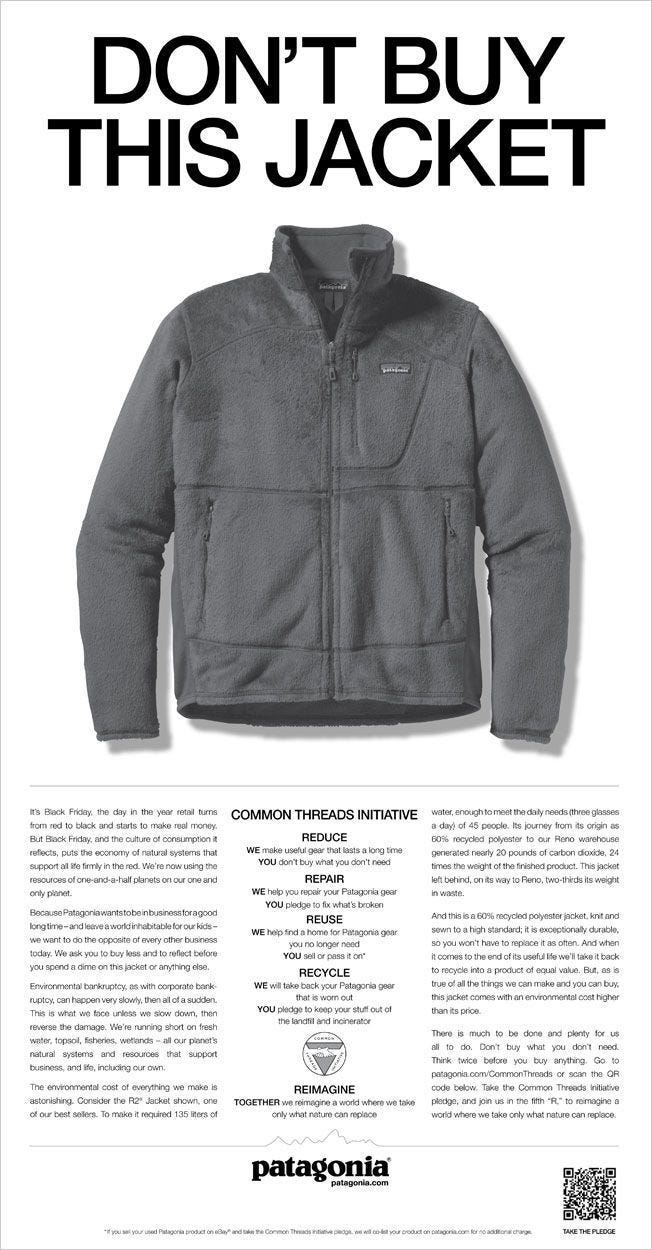
It was the complete opposite of a typical Black Friday ad.
Those ads are typically focused on driving impulse buying with reduced prices and scarcity language. Patagonia’s ad didn’t conform to this mould. Their ad made people think, the opposite of making people act on impulse.
Sales rose roughly 30% over the following nine months, and the company was doing $1 billion in annual sales within six years.
Why it worked: Patagonia had already switched to organic cotton at triple the cost and had been sharing its supply chain data with competitors for years before this ad ran. Anyone can buy ad space. Nobody can retroactively buy six years of tactical and strategic decision making.
2. KFC: “FCK”
In February 2018, a delivery partner switch left around 800 of KFC’s 900 UK stores without chicken (I remember it well!). KFC’s response was a full-page ad showing an empty bucket with the letters cleverly rearranged, along with a plain language human apology.
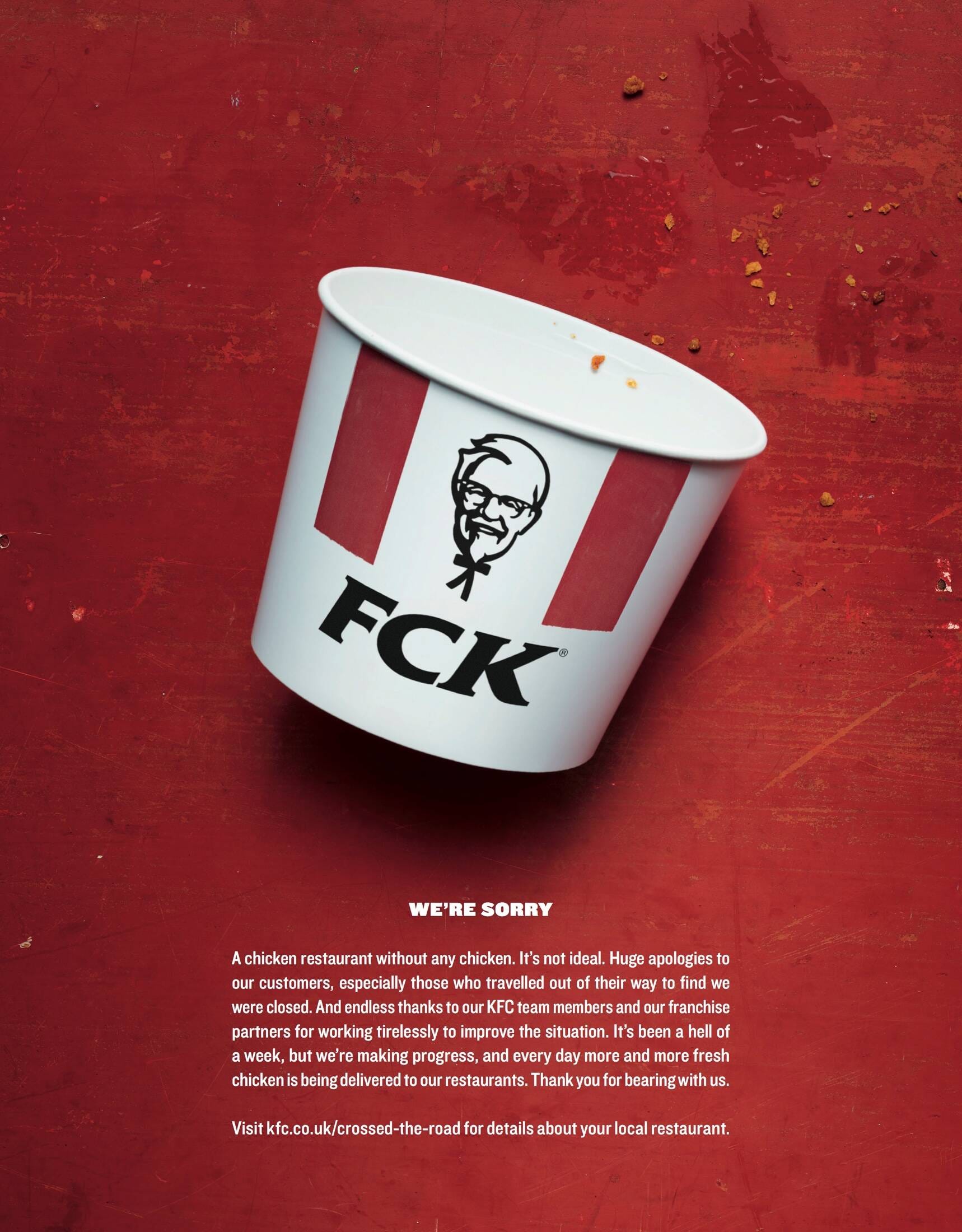
In the middle of a crisis, KFC made potentially annoyed customers laugh. The ad generated almost 1,000 press articles and reached close to 800 million people.
Why it worked: KFC never publicly blamed the delivery partner, even though the fault sat with them and they played on the obvious expletive using their name and brand typeface. Taking a hit they could easily have deflected is what makes an apology believable rather than just performative.
3. Hans Brinker: “The Worst Hotel in the World”
Since 1995, this Amsterdam hostel has run ads describing itself as the dive it actually is. The reviews on Tripadvisor are like the Wild West. The ads play on these negative reviews and span a variety of visual styles.


Occupancy rose 42% since the campaign began, and it’s picked up awards at Cannes Lions and Effies too.
Why it worked: The audience is young travellers looking for a bargain who already assume that most marketing is lying to them. Telling the truth about a real stay was one thing that none of their competitors were doing, so they embraced it, and it worked. Use this tactic at your own discretion! It won’t work favourably for every sector: healthcare for example.
4. Domino’s: “Pizza Turnaround”
By 2009, Domino’s had a pretty bad reputation, with focus groups describing the crust as being like cardboard. Rather than secretly changing the recipe and praying that customers would notice, Domino’s made a four-minute documentary-style ad. In it, their actual executives, including their president the time, read the harshest criticism aloud on camera, and then announced a full recipe overhaul.
Q1 2010 sales rose 14%, and the stock rose 130% over the following year.
Why it worked: The sequence is the real tactic here. Domino’s changed the product first, and then filmed the confession tapes. Brands that do it the other way (film the confessions and then say we’ll work on the fix) tend to get worse positioning afterwards since the failure is now on record twice rather than just once.
Another great example of the wrong way is Wells Fargo’s “Re-Established” campaign in 2018. They admitted their old behaviour was bad, then kept getting caught doing more of it. The confession came before the fix, not after, so every new headline read as the company contradicting its own ad campaign in real time.
5. Liquid Death: “Greatest Hates”
Liquid Death has spent years posting its own worst reviews and social comments on its website. In 2023, they turned a collection of genuinely hateful comments into a full music album.
The launch month was one of the brand’s strongest for customer reviews.
Why it’s a different mechanism to the other four: The other four are admissions. Confessing something true and usually uncomfortable. Liquid Death isn’t confessing anything, it’s redirecting. They’re saying “your insults doesn’t hurt us.” They’re projecting confidence rather than just honesty.
The pattern across all five
Four are admissions, one is a redirection, but all five required the brand to spend money doing something against its own short-term interest, and that cost is what makes it believable. CFO’s have a hard time signing this stuff off, which is why you don’t see it very often!
Paid media that just repeats a claim doesn’t build trust, regardless of the budget behind it. Paid media that costs the brand something real, does.
Until next week,
Gary
Want to scale your brand with us? switchfire.co