


Here’s the problem with a typical press release: everyone knows that it was bought and paid for.
Money swapped hands. And that makes it so much harder to trust.
You can wordsmith the best press release in the world and it’ll still hit like an advert, because it IS one.
That being said, some companies are doing it right. Let’s look at four who are and one who didn’t.
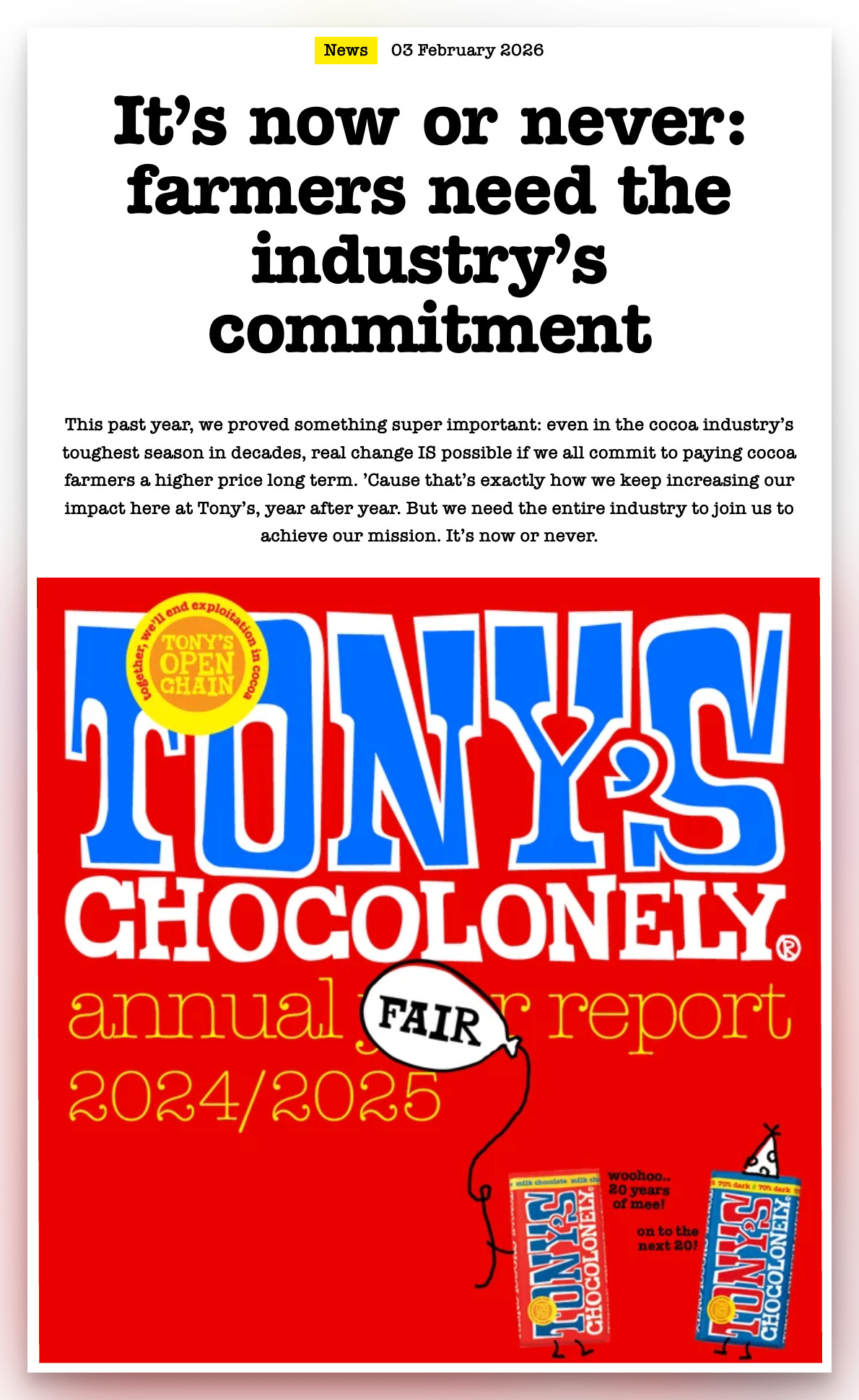
Tony’s Chocolonely publishes the tragic reality.
Every year, Tony’s puts out this huge report that actually discloses the child labour they find inside their own supply chain.
Not their competitors. Theirs!
3,448 cases were in the 2024/2025 report; more than double the year before.
Think about that. Any normal PR team would bury that in an appendix. Or they’d try and dress it up:
“We continue to invest in our commitment to end child labour.”
They certainly wouldn’t LEAD with it. But that’s exactly what Tony’s does. No journalist could ever miss this figure in Tony’s reports. That’s why it gets written about year after year.
The lesson? Lead with the bad news. Own it.
CrowdStrike breaks the Internet.
In July 2024, CrowdStrike issued a faulty update to their security software and took down almost 10 million Windows computers in the time it takes to watch a film.
Flights were grounded. Hospitals stopped. Banks couldn’t trade.
The estimated losses were around $6 billion USD.
A NIGHTMARE scenario for a globally trusted security company.
But.
Just a short while later, they published an update that highlighted the issue with a sincere apology from George Kurtz, the CEO, and links to where people can keep an eye on the latest information about the issue as it develops.
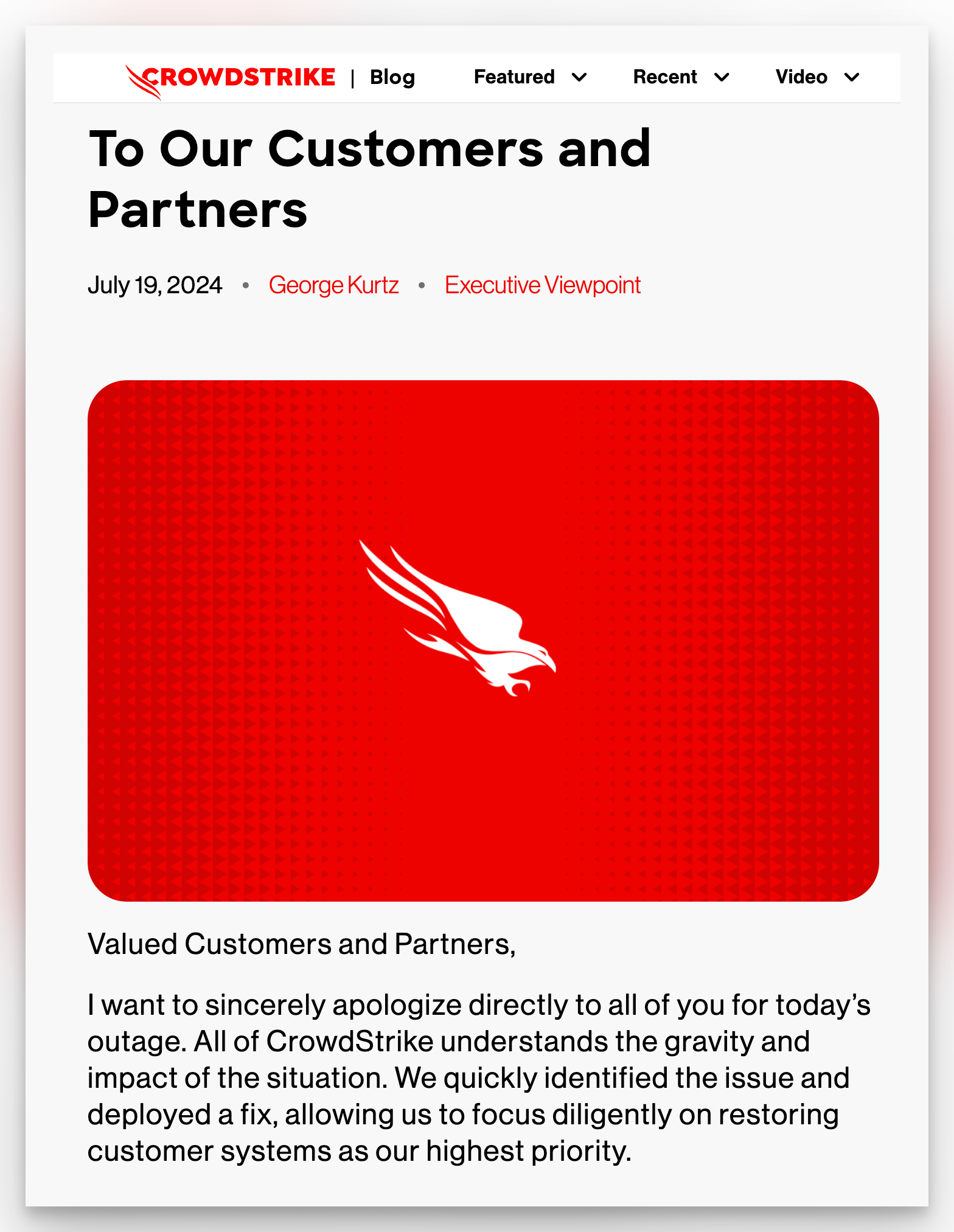
They could have published the typical: “we value and respect your privacy and take security seriously” response, but they did so much more than that.
The 12-page document told the whole story, even CISA (the US Government’s cybersecurity agency) pointed people to CrowdStrike’s reports as the definitive source. That’s pretty high praise from a government body.
That type of coverage can’t be bought.
The lesson? Be transparent, even if you’re bleeding and hurting. Not only will you feel better about it (because you’re not lying) but your customers will feel the difference.
CrowdStrike did make one little error in all this. They sent affected clients $10 Uber Eats vouchers for their trouble. Some of these vouchers even got flagged as fraudulent. I understand where they were coming from: thinking about the late nights the IT and cyber teams had to work to get systems back online, ordering food in would be a nice gesture. It just wasn’t received that way by everyone.
GitLab livestreams their disaster.
In 2017, an engineer at GitLab deleted production systems instead of a replica database. 300GB were gone. Which was around 5,000 projects and 700 user accounts. 18 hours of downtime.
If you don’t know, GitLab is:
The intelligent orchestration platform for DevSecOps, enabling teams and agents to ship trusted software at enterprise scale.
So this was a complete disaster that called into question the very fundamental nature of what they do.
So what did they do next? Livestreamed the entire recovery process on YouTube.
5,000 people watched them in real-time. A few engineers on a Zoom call, fixing this disaster. Fully visible on YouTube. I managed to find a copy too, have a scrub through this so you can see the vibe:
The industry responded with the hashtag #HugOps - very sweet.
Can you imagine the banks going live on YouTube during the financial crisis? I certainly can’t.
Something notable though, they did get called out for naming individuals in the review of the incident. Don’t throw your people under the bus.
But if we look at CrowdStrike and GitLab, two tech companies with huge incidents years apart. Both being transparent and brave. This is where B2B should be at, instead of constantly trying to pull the wool over customers’ eyes.
Buffer publishes everyone’s salary.
This one isn’t a crisis like the others.
In 2013, Buffer (the social media scheduling app) published every employee’s salary, the mathematical formula behind it, and the equity. All on a live dashboard.
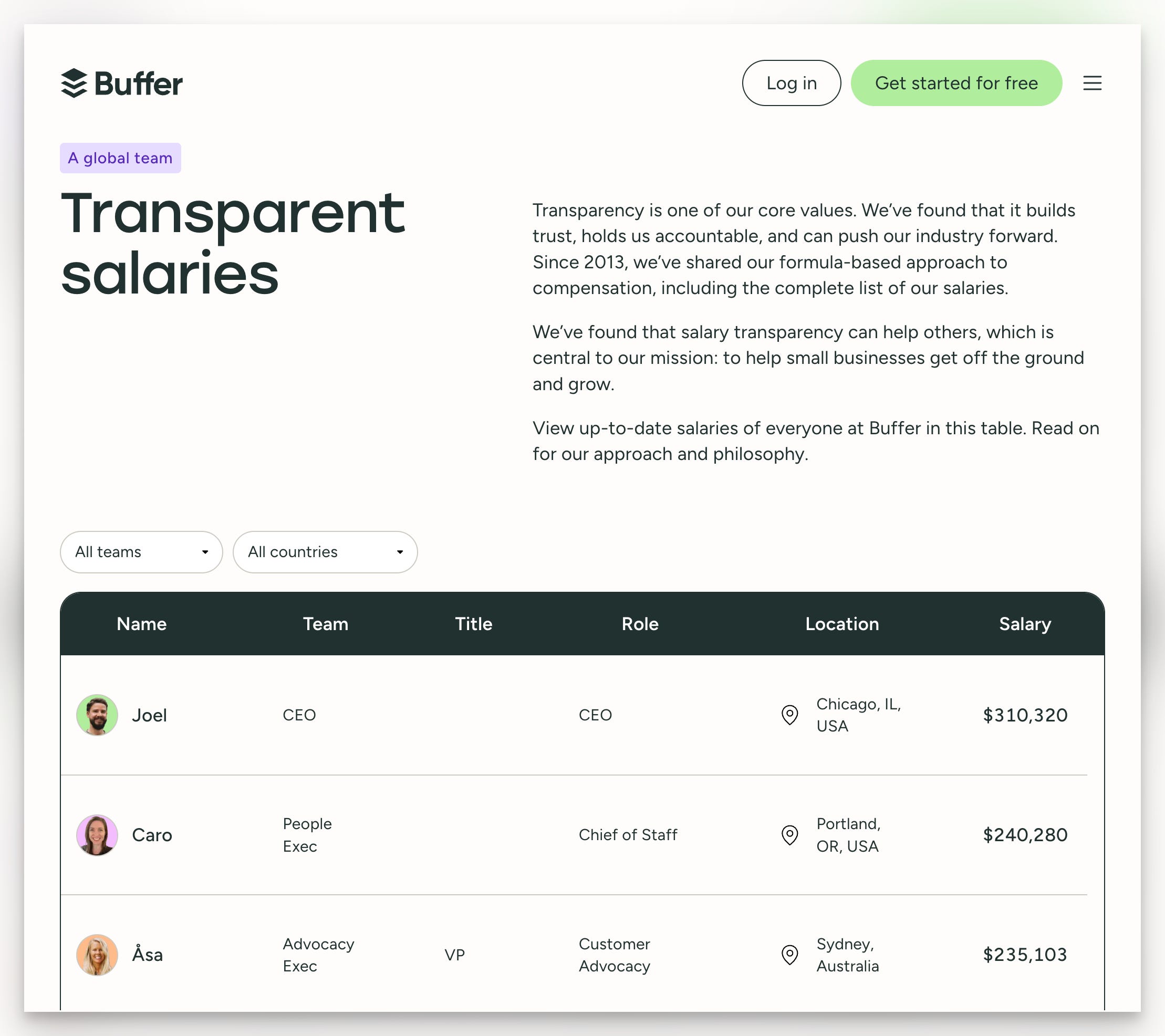
Business Insider, Inc, Fast Company, and Forbes all wrote about it. And Buffer are still publishing it to this day.
No press release. No PR agency. They just put the data on the site and don’t make a big song and dance about it. They let it speak for itself.
It’s a taboo topic in most cultures, but Buffer just tackled it head on.
They didn’t need a disaster to strike to get PR, they just showed their radical transparency.
The lesson? Put one thing on your website that makes you a little nervous.
Southwest Airlines: How not to do it.
It’s the Christmas holidays in 2022 and 16,000 flights have been cancelled. Southwest cancelled 59% of their flights, but other airlines were only cancelling about 3%.
The CEO, Bob Jordan, issued a 3-minute long apology that didn’t land well.
The Transport Secretary wrote him a letter pointing out that everyone else had the exact same weather and that they all recovered.
The comments on the above video paint the picture of underinvestment in critical systems and a culture of profit. If he’d have come out and said, “the reason this happened is because I didn’t prioritise upgrading our systems, I’m going to forfeit my bonus and stay on to help right the ship,” things might have been received in a better light.
Tips for writing these statements
Remember, all of these statements are written under pressure. So you need to practice. There’s a couple of sayings in the military:
Practice bleeding.
and
Train hard; fight easy.
You need to publish brave things that will get picked up in the press, when a crisis ISN’T happening. Put yourself in the firing line. Get used to how it feels.
You need to pick the named person and train them. Their media training needs to cover admitting fault on camera, not just answering simple questions.
You need to get the facts straight. Fast. Gather the facts as they come to light. CrowdStrike and GitLab could publish quickly because they documented everything as it happened. Do the same.
A challenge
Pick an uncomfortable thing, and publish it this month.
Until next week,
Gary
Want to scale your brand with us? switchfire.co